Saturday, August 12, 2023

Rubie Loessin

Rubie, or as I knew her Terry's Mom, was always the kindest of women. 
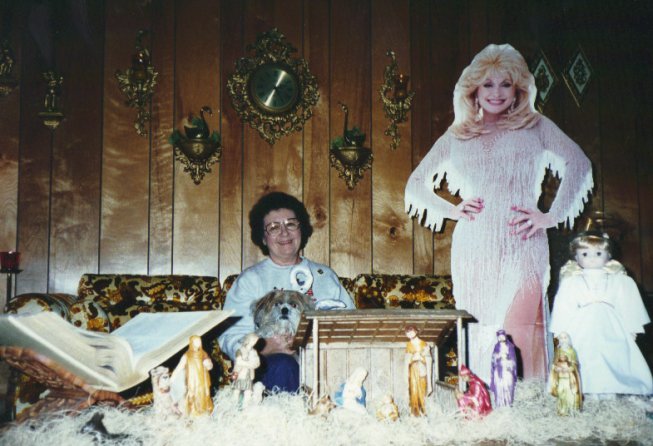
To see the full tribute as a PowerPoint slide deck, go to Rubie Loessin Slideshow.

She was always an angel to me. 

Saturday, April 22, 2023

Hill Country Ride

 Today was a great day, I spent the day riding in the hill country. 


The weather was beautiful, the people were beautiful. Life is beautiful!


I ended up raising over $2500 for the Hill Country Ride for AIDS in the name of the Friends of The David Powell Clinic.

#hcra

Saturday, August 13, 2022

Tageswört

I've been listening to a German news cast (tagesschau 20 Uhr Nachrichten | tagesschau.de) on a podcast app for years, and sometimes I hear a word over and over that I don't understand.   For a while I can ignore it and get the overall meaning of the newscast from the context.  When a word keeps coming up, I just need to look it up.  That´s when I go down the rabbit-hole.   The most recent word was "nachvollziehbar". 

The word "nachvollziehbar", ironically, means comprehensible.  As is often the case it makes me want to understand the subtleties of the word and the component parts.   For example, is there such a word as "vollziehbar" or "ziehbar"? Well, the answer is, "no", but that doesn't stop me because, like English, German follows patterns, and follows them much more closely than does English. 

The suffix "-bar" is similar to the English suffix "-able", so if you strip off the "-bar" and turn the word into a verb, that often yields some interesting results.  So, as expected "nachvollziehen" just means to comprehend, which was expected, but what is "vollziehen".  That, as it happens, has lots of meanings.

It can mean "happen", "take place", or more actively, "to make happen" or "carry out an action".  Translating the components of the word "voll" and "ziehen" as "full" and "to pull" respectively, one gets the sense of fully completing or pulling through to the end, which makes sense. But in different contexts, "vollziehen" can have the meaning of completing an act of marriage, as in to consummate the marriage "die Ehe vollziehen".  I'm not sure which meaning led to which, but it also is used more broadly to mean any act of sexual congress in the phrase, "mit jemandem den Beischlaf vollziehen". Finally, it can also be used in the context of non-sexual congress as well.  To say that an act of congress has been executed, or enacted is to say, "ein Gesetz vollziehen". 

At that point I'm finally feeling sleepy enough that I lay down the phone and drift off to sleep. 

Sunday, April 18, 2021

Starting out

 Last night, a friend came to my house to just visit.  We had cake.  We talked about the past.  We talked about the future.  We talked, and it felt good - comfortable - no pretense.  While discussing the struggles he was having empathizing with his boyfriend's current situation, it was apparent to us that we needed to remember what the view of the world is like when you were making your first big life choices. We had to remember the weight of those choices, because we were unaware at the time which of those choices would be critical and which ones we would either forget we ever made, or we would look back on and laugh about the importance we gave them.

When I graduated college, I was proud to have gotten a degree in what I considered a hard science. Physics is a hard subject, but undergraduate programs in physics are preparing their students to pursue graduate programs in physics.  They are not preparing their students to become engineers.  The approach is perfectly reasonable since industry want's to hire someone who was trained to enter industry, with a set of skills for the industry, i.e. an engineer.  The school is training someone to think about more fundamental questions where we don't even know what we don't know.

At 22 years old with my degree in physics and 5 years of needling my engineering friends about how I was a scientist and NOT an engineer, I was completely unaware of what the world wanted or needed. I assumed that everyone would see my value as a scientist. I spent the next 5 years on a factory floor in a manufacturing facility. It was a wonderful experience.

I took a job in a manufacturing company after an intense search for a job.  I must have submitted resumes to dozens of companies. This was before the era of online applications, and internet searches.  At the time there was no world wide web.  I sought a position where I could use my advanced math and understanding of the fundamental laws of nature to derive whatever I needed, but after reading the job descriptions in rooms full of three ring binders, and going to job fairs carrying my resume from table to table, I began to realize that I needed to figure out what marketable skills I actually had.  I needed to figure out what I could do that the companies wanted, and how I could demonstrate that.  In the mean time, I continued to visit company offices in the area.  I had heard rejection so much that I didn't even ask if there were opening, I just asked that they put my resume on file and let me know if an opportunity became available. Finally, after driving around in miserable Texas heat for hours, and giving my standard line, the stand-in receptionist on duty at one of the companies asked me to wait. She was just filling in for the regular receptionist who would probably have just taken my resume and laid it on a stack.  Instead, as the executive assistant to the facility manager, she spoke to her boss, who offered to interview me on the spot if I had the time. As it happened, I did.  While waiting for the interview, I turned to another person in the lobby and ask, "So, what does this company actually do?"  I ended up taking the job. 

The point of my diatribe is not, as it might be assumed, that my persistence paid off, but rather, that my ignorance and ill-preparedness lead me to take a position that I new nothing about.  I had not done research during my undergraduate degree into what the world needed. I had not done research into what the company did.  I had not done research into what skills I could offer. I had assumed that the school that I had gone to knew what they were doing and had prepared me to be picked up, and that the companies hiring me would know what they needed and would know what to ask to find out if I fit. But it is forgivable that I should make that mistake the first time.  The truth, however, is that that was just the first of many careers that I embarked on without knowing what I was getting into.  In the absence of experience, it sometimes makes sense to see what happens.  In the end the choice that I made to take that first job gave me insight into what I could do, what the world needed, what the world was.  After 5 years I knew better what I wanted to do and take more deliberate steps. Unfortunately, I hadn't really learned the real lesson, that my days of learning would never end, that my view of the world would never stop expanding.  The end of that 5 years was when I came to the first of a series of ah-ha moments where I looked back and thought, "Now, now I really know what the world is about.  I only thought that I knew what it was about back then..."

My conversation with my friend, was just the latest in that series of epiphanies.  The difference is that these days, neither my friend nor I are surprised when we have them and neither of us presume that they won't happen again.  I imagine it as entering deeper and deeper into the woods until you come to a clearing and you can look around and get your bearings before you carry on along your journey.  Eventually, you end up in a place where you're satisfied with the view and you've seen enough to know that the place you are is as good as any you've visited or at least better than the some of the places that you weren't willing to stay, so you set up camp to rest; for a while at least.


Saturday, April 17, 2021

Word of the Day

Often a word or phrase that I know is real will hound me until I look it up.  When I do, I can usually understand why in the same way that I attach meaning to a dream I've had.  Last night, or early this morning as was actually the case, the words that plagued me were "haggard" and "bedraggled".   Haggard was a word that I was familiar with.  In the past, I had used it carelessly to sympathize with a colleague at work and offended her.  Bedraggled, on the other hand, was one of those words that just sounds like it feels and I wasn't sure if it was a real word or just one that I wish were a real word.  I put it out of mind for a while, but I kept waking up. Since both haggard and bedraggled refer to appearance, they can't really describe how I felt, but having seen myself in the mirror after a month of not shaving made it clear why I had bedraggled on the brain. I'm pretty sure that if I looked half as bad as I felt, anyone would have called my appearance haggard.  I still haven't found exactly the word that I was looking for, but it must be akin to frazzled, exasperated, or burdened and enervated. I've been struggling with a problem that is exciting and frustrating, but right now, it's more frustrating than exciting and that's what has me so .... damn what's the word!

Writing Practice

In order to practice writing, I'm going to start a habit of writing. I encourage everyone who may be following this blog to un-follow the blog so as not to be overwhelmed with the trivialities of my wandering mind. 

William Zinsser's, in his book, "On Writing Well", he talked about unity. The first three elements of unity that he suggested, and on which he expounded, are person, tense, and mood.  Person is the point of view that one chooses for the article or piece. First person, participant, is how I am this article for example, but I could have chosen also to write it in the third person as an observer.  I could also have chosen to write in the second person, but I'm not a fan of that style.  Tense is the temporal point of view that one has to choose.  As he suggested, I have to decide where in time I'm primarily going to place the reader.  Am I going to be in the moment, as I am right now, or write in the past tense, as if telling a story about what happened? He pointed out that one can change tense where appropriate, but it should be relative to the time.  For example, I just asked a question about how I would choose to write in the future, but from the current point of view, "am I going to be"  I then went on to talk about how Zinsser, "suggested" and "pointed out".  I'm not sure if he would agree that that is appropriate.  The third element is mood.  I am writing in what I would consider an informal mood telling you about my experience.  I suppose if I were writing in the third person I would probably choose to be more formal. The concept of mood is probably going to be the toughest for me to control. With that in mind, I'm going to switch tasks and write some other thoughts unrelated to writing, so I'll do that in a different article. 

Friday, March 26, 2021

Scarcity

I often find myself searching for a word for a concept that I have in mind, but have no word to describe. Sometimes I have a word in mind that is close, but it has a connotation that is too specific and conjures an meaning that isn't what I'm looking for.


Last night, some time between 2:00 am and 5:00 am when I was tossing and turning and couldn't get back to sleep, I was thinking about scarcity. It started when I was listening to a news program about vaccines in Europe.  The Prime Minister of Austria was complaining about how European vaccine manufacturers had been exporting the vaccines to foreign destinations outside of Europe, but Europe had not been able to import any vaccines because of export restrictions by some of those same foreign companies on their manufacturers.


At first this struck me as a logical complaint, and one that pundits, politicians, and most people predicted as soon as the search for a vaccine began. The question was if rich countries are the ones developing the vaccine, how do we ensure that the poorer countries are not excluded from receiving a share of the vaccines.  A cynic would question how poorer countries could be sure that they would ever get the vaccine, but most polite politically minded folk simply left the question at, "... in a reasonable time for a reasonable cost".  Questions that this line of thinking raises are: Is it right for a country to refuse to export the vaccine before it has vaccinated enough of it's own population to get it's own economy back to a certain degree of stability?  Is it appropriate for a country to export a potentially life saving drug when it's own population (often just the historically underserved subset of the population) is suffering, just because it could be more profitable to sell it elsewhere? How do politicians justify not accepting the vaccine from political enemies, or putting conditions on providing vaccines to political enemies?


After considering those questions for a moment, I realized that they felt familiar. This winter when Texas was suffering from a severe cold spell (well at least severe for Texas), thousands of Texas residents were without power. It turns out that part of the problem was a shortage of natural gas for generating the power.  Politicians pointed fingers at the regulators from whom they had stripped all regulatory control.  Regulators pointed fingers at distributors and power generators. Power generators pointed fingers at natural gas suppliers, and natural gas suppliers pointed fingers at laws passed by politicians which protected.  All the while, those same natural gas suppliers were selling the natural gas at sky high prices to places outside of Texas.  So again, there is a scarcity of a commodity, and the population in the place that generates the commodity is suffering. While there is a layer of abstraction between the scarcity of the resource in this case and the impact on one's life, that isn't as clear as it is in the case of scarcity of the vaccine, it is a similar moral dilemma.


This same phenomenon exists also in the international oil markets.  Despite the fact that oil prices in the US might surge at points, our oil is not our own, it is a world wide commodity. Oil industry politicians argue that we should open up wilderness lands because we need to secure our oil reserves.  If securing our oil reserves is such a priority, is it right that they allow the oil companies to reap huge profits selling US oil on the open market instead of directing it to where they claim that it is needed to ensure our national security?


So the pattern here is as follows: a region has some commodity, because that commodity is scarce and demand is high within and outside of the region, the commodity is valuable. Does the producer of the commodity have a moral right to choose how they will distribute that commodity?  What role does the region's government have in that decision?  How should the government's investment in the development of the commodity influence the decision?  What other questions are there?  This leads me to the crux of my concern.  Is there a name for this phenomenon?  It seems like one that economists would have had to deal with before. 


Monday, March 8, 2021

Missing a Friend

My friend, Christie, just took leave of Austin on Friday after having been here for a while. It seemed harder to say good-bye this time, and perhaps that is because I had invested so much into her visit. Starting in early December, in preparation for her visit, I went into a self-imposed lockdown [COVID-2019]. Being that she is more cautious than anyone else in any of the non-overlapping circles of friends that I have, I felt a compunction to abide by a higher standard of restraint in my social interactions. She has good reason to be cautious as some of the other folks she is visiting were particularly vulnerable to the virus that has plagued us for the last year. I’ve been cautious, but only because of my own preference for solitude and isolation, and certainly not as strict as she. Anyway, I had invested a lot of energy and focus on being available for Christie, and she stayed longer than she had intended, which I thoroughly enjoyed. So, like any habit, it’s hard to suddenly break the habit of having her around.

I’ve been watching the icon floating along the highway across west Texas trying to predict here path, and imagine her experience. I hate driving, especially the kind of driving that she loves - out on a highway where the world is scrolling slowly past. For her, I think it is cathartic; I’m not sure why. For me it’s painful and tiring. I feel a heightened sense of paranoia, ever vigilant of the cars around me. If I go to fast I become annoyed by the cars ahead of me; if I go to slow I’m annoyed by the cars on my bumper. I get annoyed at people that drive in the wrong lane, or drivers that won’t pass and block the lane. And the frustration isn’t even for me, it’s a frustration for the other drivers around me who I imagine to be annoyed. As cautious as Christie is, I have no idea why those same things don’t bother her, but they don’t seem to. She says that she likes it being out on the highway. It’s driving in the cities that she says annoys her.


Why is this so much on my mind? I have so many other things to think about, but maybe that’s just it. Thinking about Christie is simple, and regular. She doesn’t look to me for answers and she’s good at making it pretty clear what she’s looking for from me. With other friends, I don’t know if they expect me to feel outraged or excited or sad just because they are. I can usually tell what they are feeling, but I rarely actually feel what they are feeling, so it’s difficult for me to know how to react or what to say.

She’s reached Northern California and I’m feeling more comfortable just watching her icon move along the highway. Just past Redding she’ll start seeing some trees, and I know that she feels the same about the trees as I do. There’s something calming like a re-assurance that all is not lost. I get that feel when I open my windows and hear the birds, or find a toad or a lizard in the garden. Seeing that nature is abundant and resilient makes me feel like we haven’t completely destroyed the world.  It makes me feel more secure that she is getting back to Oregon, so that she can see that all is not lost and nature hasn’t gone completely insane even if, as it seems, humanity has. 

Sunday, September 29, 2019

Considerate

Considerate: careful not to cause inconvenience or hurt to others.(1)

I'm continually appalled by the inconsiderate nature of people as they moved through the world.

On the sidewalk: I see scooters parked not just on the sidewalk but completely across the sidewalk as if no one else in the world is every going to use the sidewalk.  Often I find them laid across the bike lanes.  I think that is not just inconsideration, but deliberate.

On the bus: I often see men find the 3 seat benches to sit on, which, admittedly are more comfortable, but instead of "man spreading" on either end of the 3 seat benches allowing the possibility for at least one other person to use the space, he will sit directly in the middle, rendering all three seats occupied.  For all those women who just nodded in recognition of this situation, pause for a moment and consider the woman on the bus who finds that same set of benches, also sits in the middle and set's her bags on both side of her equally guilty of "woman spreading".   Your sex is not any more innocent or considerate in this case.

In public coffee shops and restaurants that have a "seat-yourself" option:  I constantly see single customers come in and sit by themselves at a table made for five or six people.   I saw today someone come in and begin to sit at a table for four even though there were many tables make for two, and I began to think ... how inconsiderate. To my relief, the individual looked around and found a table for two; I was relieved.  As he began to settle himself in, I realize that he was just using the table for two to stage his bag then he sat astraddle that table and the table for four that was next to it.   So, to my disappointment, he was actually even more inconsiderate than I originally thought. 

I'm reading a book called, "Nudge" by Cass Sunstein and Richard Thaler (excellent book), and I realize that perhaps the cafe could find a different arrangement of the seats to encourage people to pick a spot that maximizes the comfort and needs of everyone.  The bus system does it's best to encourage folks to at least leave the seats near the front of the bus for those that need them most, and some of the scooter companies at least force the riders to at least consider how they are leaving the scooter parked, but perhaps they could take a clue from "Nudge" and give more immediate feedback.


Monday, March 18, 2013

Broken Record: Broken Spirit

I've decided to start chronicling my training for the BP MS 150 2013.

Here's a first post to catch everyone up to where I am. 

I started this season with the plan of beginning with a 50 mile ride being ready to meet a midway point of doing 85 miles by the end of March.  As a goal I had decided to get ready for the LBJ 100 which has an 85 mile route.  That was a little over a month ago and to paraphrase Helmuth von Moltke, no battle plan survives contact with the enemy.
My first ride was ended with a flat tire on the cold, wet, windy side of Parmer lane where I and my riding buddy had to shield ourselves from the wind behind a gravel pile awaiting a friend to retrieve us.

From there I could only improve and I did adding a few miles at a time and mainly just battling the wind, my riding buddy and were able to do 48 miles the next ride.  I rode again on my own and this time with the wind in my face I decided to turn around at the 26 mile mark for a total of 52 miles.  While that was an improvement, my goal on that ride had been to make it up to Florence which would have been a 66 mile round trip. 

This last weekend (March 16), what I was only battling was my own stupidity.  That day I procrastinated leaving the house until well past any reasonable hour and decided to invite my friend along which allowed me to procrastinate even longer.  When I finally did get on the bike it was already 11:30 on what would turn out to be the hottest day of the year thus far.  Besides starting late, I hadn't eaten breakfast.  I'm not a big breakfast person anyway, so I thought, "How much is that really going to help?".  I took off anyway, the day was warm and pleasant and the westerly breeze was cool on my back.

I was about a mile or so from the car when I realized that I hadn't remembered to my water bottle fully, and thought, "gosh... I'm already getting such a late start and with three quarters of a bottle of water it's just not worth it to ride back and fill it up."

Things seemed fine, I was doing great and even having to stop and change a flat tire didn't dampen my spirits too much.  I knew I was getting a boost from the wind behind me pushing me along and I decided that I was going push past my 52 mile limit and commit to a full 60 mile ride. 

I got to my normal turn around point and with only a slight hesitation I zoomed forth into uncharted territory.  When I did reach my new halfway point, 30 miles I was pretty pleased with myself.  I stopped for just a moment to ponder my accomplishment, knowing that I was committed.  When I did turn around, that very moment that I turned around, I realized the depths of my self-deception.  Looking back on the strip of asphalt that stretched before me and feeling the wind in my face that had just been my kindest friend, I knew that she would be my most bitter enemy. 

Battling my way back against the wind, I started thinking of my water bottle.  My mouth was getting a little dry and I began to recall scenes from the movie 127  hours.  I thought about the full bottle of water back in the car.  I thought of the half dozen power bars that I had left in my camel back.  I thought of the bowl of oatmeal that I hadn't made for breakfast.

Surely,  I would reach a point where the wind would at least be blowing across my path.  I struggled against the spiteful wind at some point literally standing still when I quit peddling.  Rationing my water at sips at a time knowing there were no houses, looking longingly at the muddy rivers and creeks I was passing, with 15 miles to go, I came upon a house.  The brass of the faucet gleamed as if it were itself glowing.  It was an oasis in the desert. 

I finally made it back to the car and collapsed for a while before I even felt like driving.

So, on a happy note ... I rode 60 miles!

Saturday, January 24, 2009

Excellent Quote

I just came across this excellent quote:

“Human speech is like a cracked tin kettle, on which we hammer out tunes to make bears dance when we long to move the stars” (Gustave Flaubert, Madame Bovary).

While the most eloquent speaker can draw up emotion from deep with in us, make our bodies shiver, and our blood boil, there are so many more dimensions to experience about the world that our language leaves flat and lifeless.

Friday, January 23, 2009

Displacement

I'm sitting at Chuys and waiting. It is a festive atmosphere with lots of people enjoying each others company. Some are families some are co-workers. There are lots of kids running around. Occasionally, I'll see some one looking at me and it's been fun to watch their expressions change. At first they would give a quick glance and carry on with their conversation. Then their gaze began to linger a bit longer and an inquisitive look would flash across their faces. Now, as I catch their glance, I see pity.

The feelings that I'm feeling are strangely reminiscent of how I felt in Berlin. I had been there long enough to feel comfortable with the city, and, at the same time, I didn't have any one to call, or anything to do but wait. Wait until it was night, wait until it was day, wait until a party started. I was surrounded by people some of whom I had begun to recognized and some with whom I had become quite familiar. None of them seem to acknowledge me. There was a lot of activity, but I wasn't involved. I was invisible and just observing.

Sunday, January 18, 2009

This I Believe

This has nothing with my ride or my training. I just found it encouraging to remember the hope that lives in innocence.

Tarak McLain, a six year old who is living in Austin, Texas was given an assignment to bring in 100 things to his class. He chose to bring in his beliefs...Here are the first 30. There is a link on the site to actually hear him reciting his beliefs as well.

Check out his "essay" from the collection This I Believe.

Tuesday, January 13, 2009

Last night I woke in the middle of the night dreaming that I had a classroom full of unruly students. It's been a while since I've had one of those dreams. I use to have them all the time. Part of it is probably because of feelings of inadequacy at work combined with running into one of my former students.

When I woke up I was thinking about how to teach Algebra. I wanted to relate the algebraic thinking to the world of a student. I know that none of them need "algebra" as math at that age, so I asked myself what algebraic thinking is outside of math. We say that it relates to everything and yet there are thousands of people who say that they don't know "algebra" and can't do "algebra". How are these people getting by without it if it is so important?

Simply put, they aren't. Sure, they don't have to manipulate equations with x's and y's. Instead they have to make substitutions where they set up scenarios in such a way that anyone could fill the role. e.g. Who could play a certain positon if so and so were injured? What would a dream team look like. What would it be like if so and so was on the date with so and so instead of so and so? They make mappings in their head of relations. e.g. Bret -> Quarter Back, Joe -> Fullback, etc. Susan -> Jack, April -> Manuel, Eric -> Jason...

One way to introduce the concept of "relations" (mappings) is to have the students find things that are related and display those things in some sort of form. You are almost guarenteed to get tables and maps. Then you can introduce a grid and represent the relation as a point in the grid. (can you say cartisian coordinates?) Finally, start mapping things in large numbers. You can use a computer and excel. You can relate every student in the school to a "zipcode" or a phone number, or the number of phone numbers in the phone, or any other collection of information about them. Then expand that to the city.

Once you start dealing with things that are too big to fit into a graph or a table or even a database, you would introduce sets of ordered pairs (domain and range) that have an infinite domain or an infinite range and show that only a piece of it is representable on a graph or a table or a map at a time. Then introduce the concept of a symbolic formula that represents the entire relation. Number of molecules in a volume is a constant times the volume.

Stick with writing out the descriptions for a while, then introduce the concept of using letters to stand for the quantites. Eventually, you will have to manipulate some of the formule and you will be able to introduce the letter x and y to stand for any quantities (abstract) and talk about generic manipulation of symbolic equations.

That...is how algebraic thinking leads to the need to learn "algebra".

Monday, January 12, 2009

Today I found Richard Galiano on You-Tube; here's the link:

http://www.youtube.com/watch?v=hLjqpIbwo54